In 2013, at the Niaz workshop, this project began with the design and creation of a Quran measuring 50 by 70 centimeters. The entire Quran was divided into several volumes and woven like a carpet. The outer cover was made of wood, and the binding process was exceptionally challenging. The Imam Ali Museum in Qom also commissioned luxurious shelves for this wooden Quran to ensure proper preservation. These portable shelves were crafted using a blend of traditional Iranian arts.

A New Chapter Begins
I joined this group in October 2015, and one of the first tasks I worked on was this significant project. The project was divided into two major parts:
- Creating the Quran
- Building the shelves
- Designing two grand stands
Creating the Quran
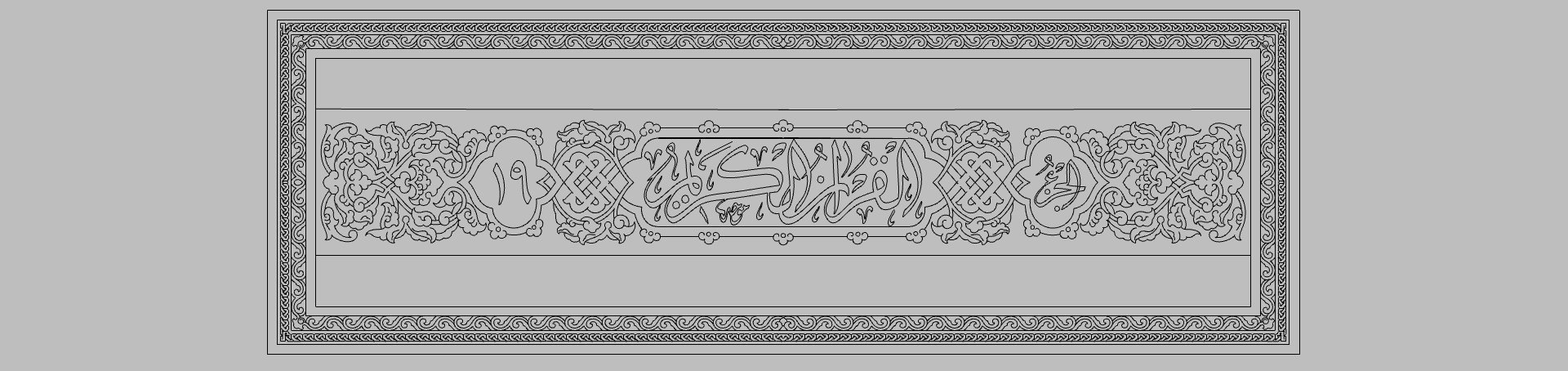
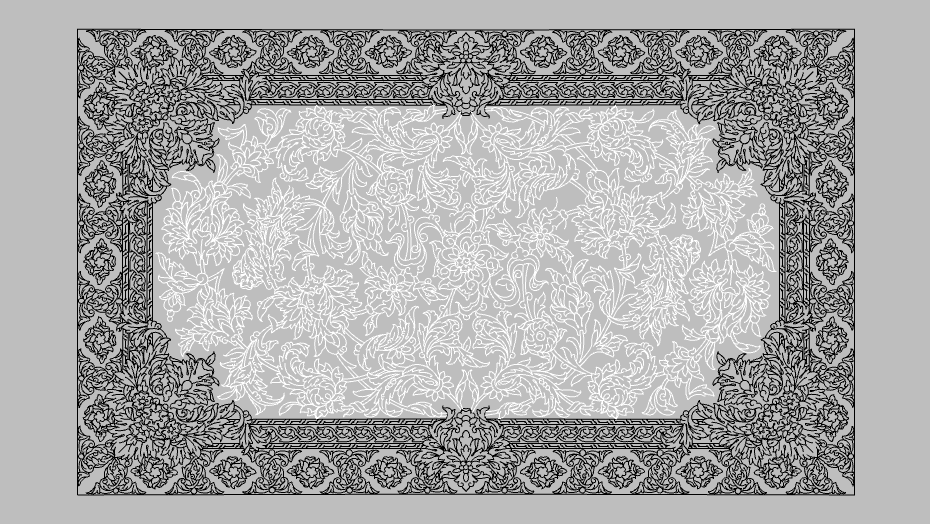
My tasks for the Qurans included designing, modeling, and preparing the covers for laser processing. The initial design was a highly intricate pattern drawn by Master Fazeli, and I was responsible for its production preparation. First, all the motifs had to be vectorized in Rhino software, followed by color separation for laser work. However, the initial design was not approved by all team members, so I began a new design process alongside Master Takestani.
In addition to designing, I was also responsible for digitizing the design process at the Niaz workshop. I initiated the formation of a central and cohesive team to enable documentation of the design and production processes.
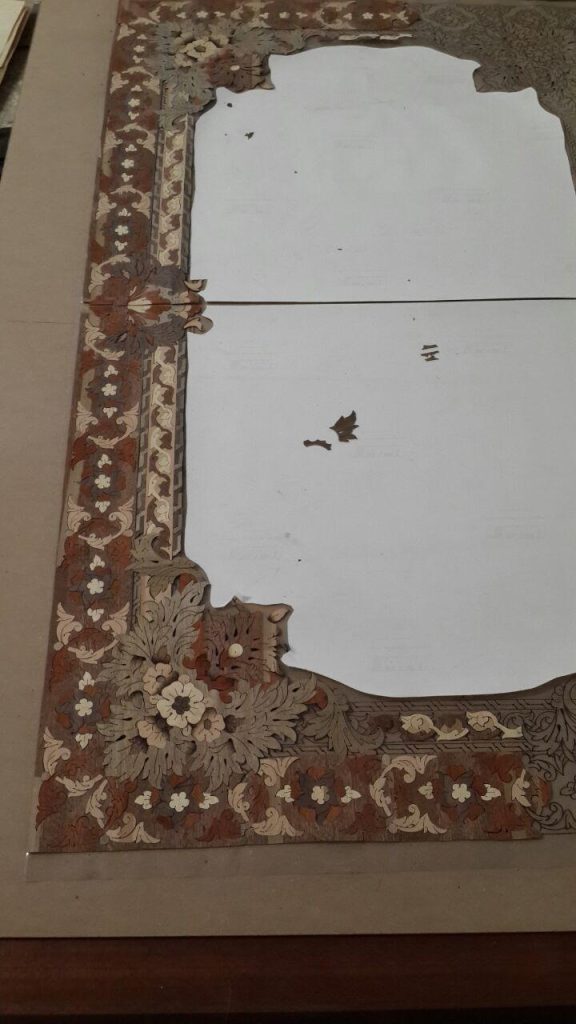
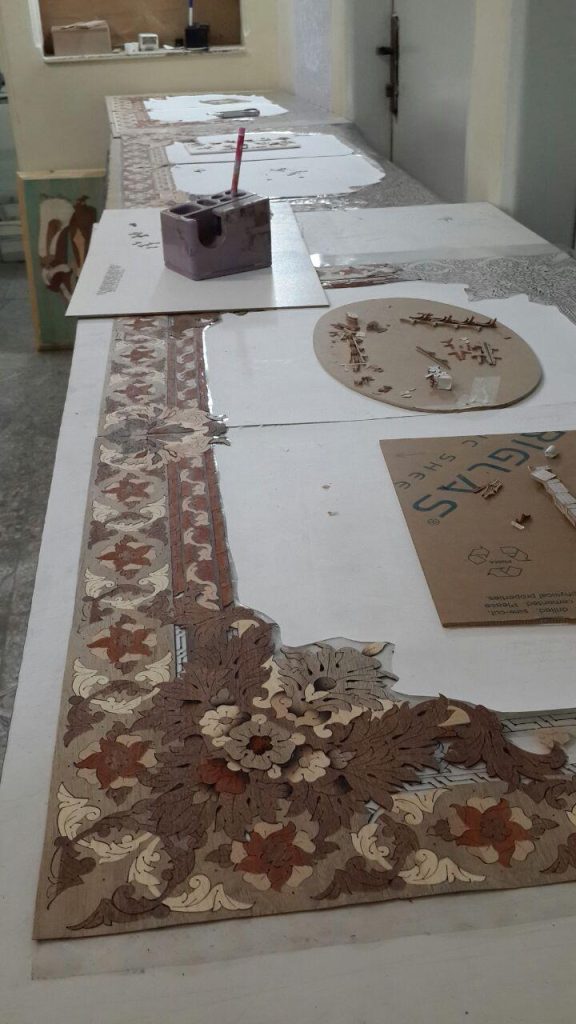
Building the shelves
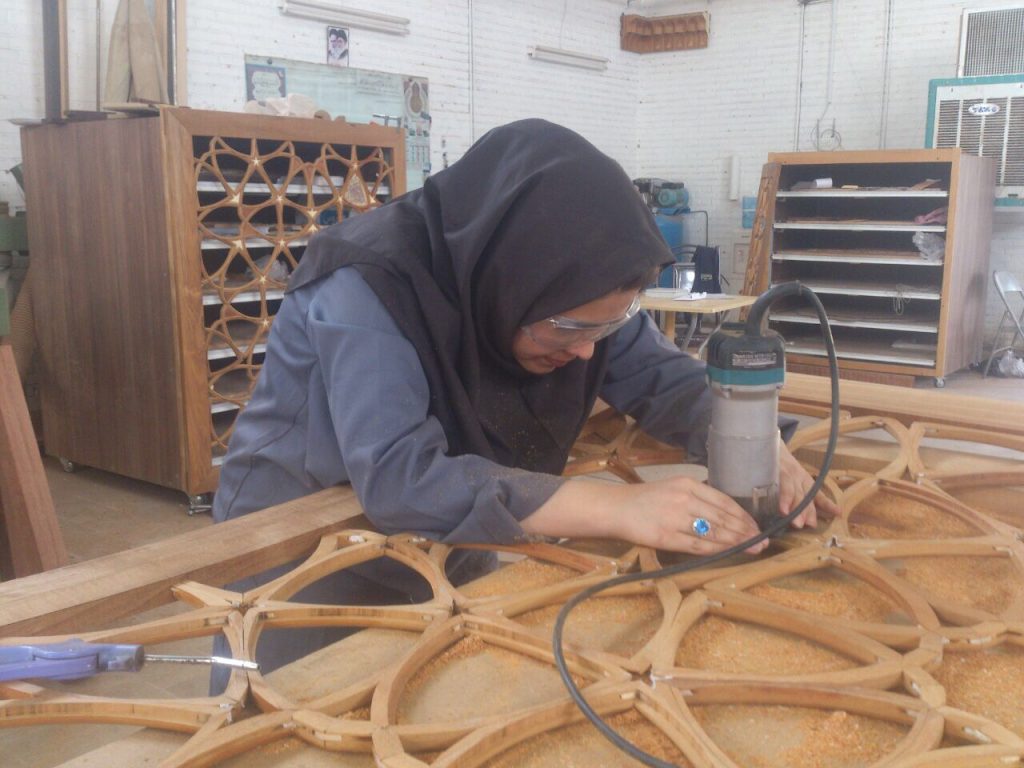
The metal infrastructure of the shelves was already prepared, and the design on the cabinet doors was crafted by my mentor, Mr. Mehdi Khoshnezhad. One particularly fascinating aspect of these lattice designs was that, at the time, we constructed them with curved and arched shapes—something that might have been unparalleled globally.
- The Bottom Frame
- The Headboard
- Right and Left Sides of the Cabinets
- The Cabinets and Their Doors

1. The Bottom Frame
I started by creating 3D models of the shelves and then designed the geometric patterns, known asGereh-Chini, for the lower sections of the cabinets to harmonize with the curved patterns on the upper sections. When placed side by side, the total length of the cabinets reached about 7 meters. Despite each cabinet being independent, we wanted them to appear as a unified piece in the museum. To achieve this, I designed a seamless frame for the base.
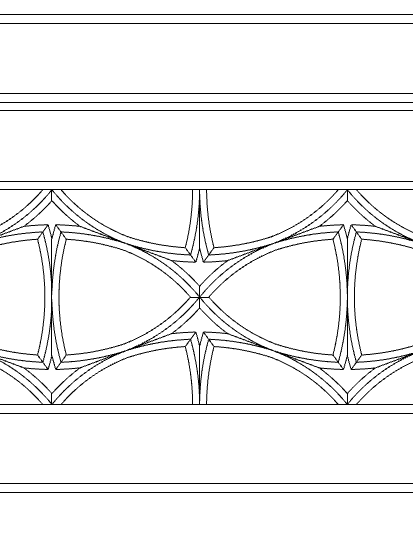
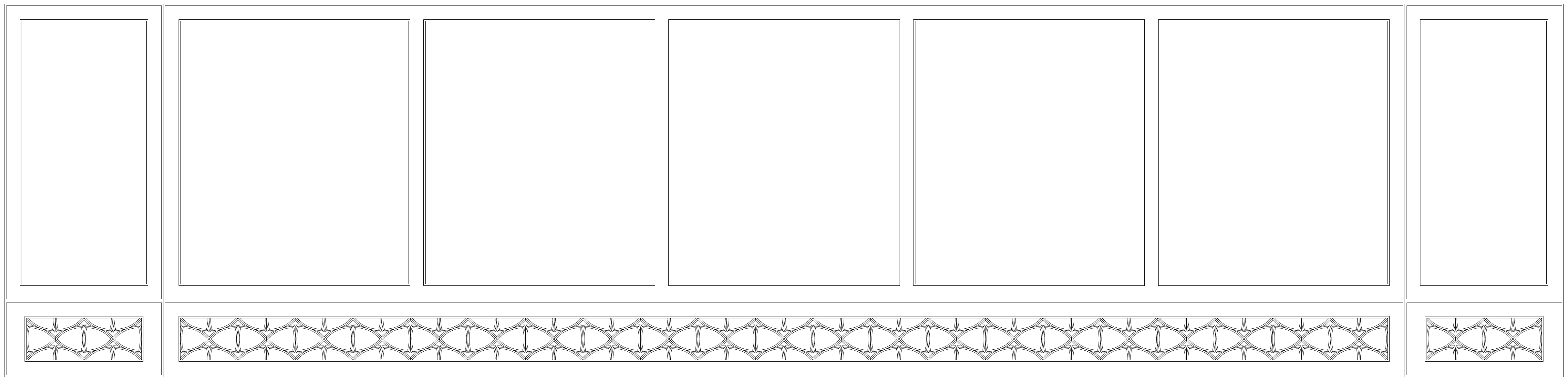
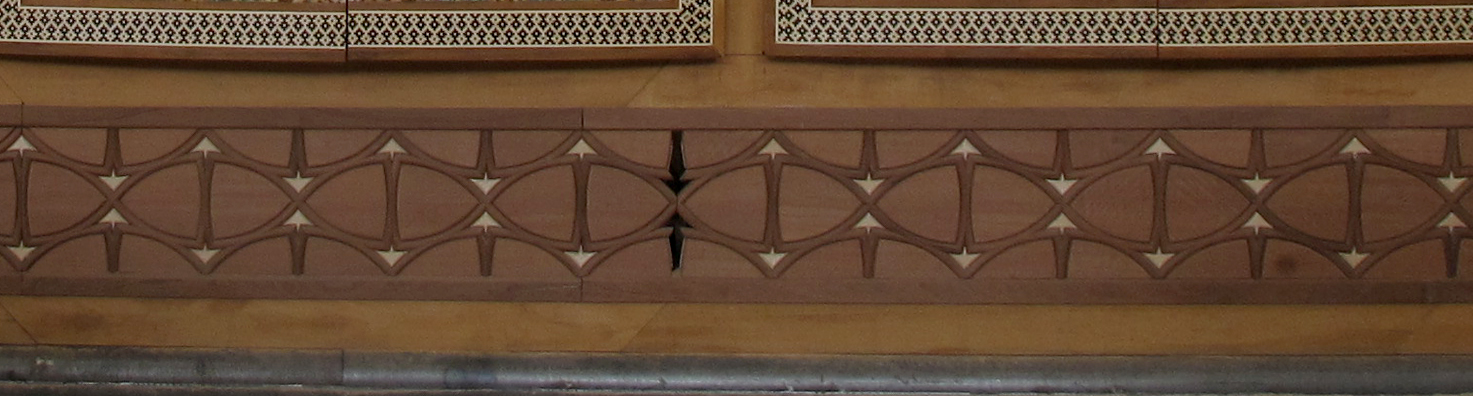
2. Cabinet’s Headboard

Headboard: Side view


Headboard: Front view


3. Right and Left Sides of the Cabinets
4. The Cabinets and Their Doors
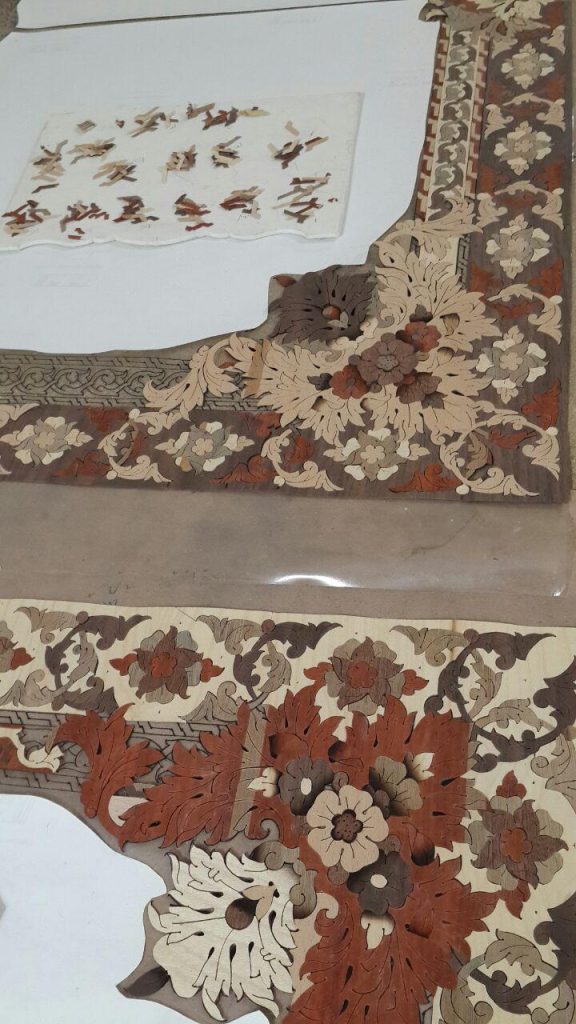
The design of the cabinet doors was led by Mr. Khoshnezhad, while I was responsible for designing and implementing the internal details. The management decided to adorn the cabinets with carpets, similar to the Quran itself. This presented a significant challenge, as the cabinet doors were curved, and fully covering them with carpets would have caused serious damage over time, including sagging and deformation.
To address this, the carpets were designed and woven in smaller sections, which were later attached to the doors using supports. I collaborated with Master Takestani on the carpet design process and, thanks to my extensive experience in the field of carpets, was able to execute and manage the project with exceptional quality.